
ZHUOHENG / COMMERCIAL PASTA EQUIPMENT
Pasta machine for restaurants: plan around your service window
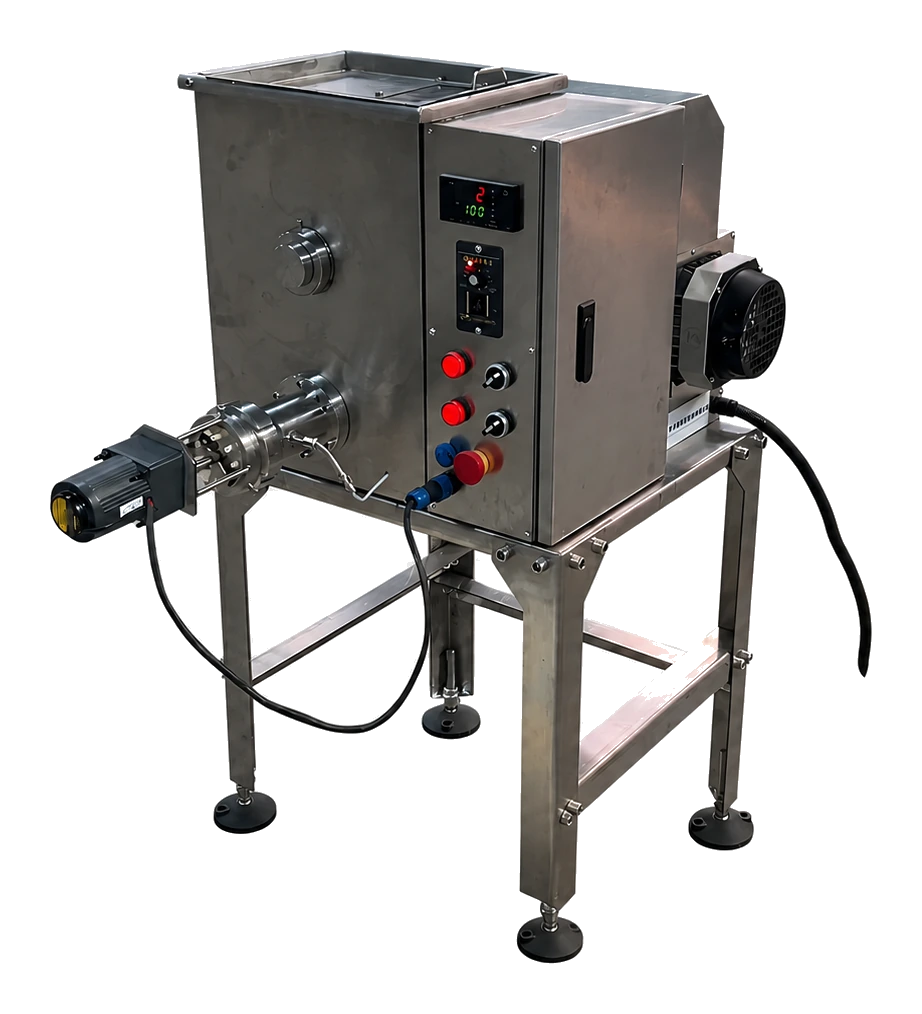
A pasta machine for restaurants should fit the menu and the preparation window before service. Begin with the shapes you want to serve, normal and peak daily demand, and the time your team can allocate to production. Zhuoheng offers 15 kg/h and 40 kg/h configurations for review. The suitable option depends on your recipe, molds and workflow. Share these details so the machine and supporting requirements can be evaluated around your kitchen, rather than choosing from the capacity label alone.
Plan demand around the service window
Record daily pasta demand in kilograms and identify when production can take place. Include time for ingredient preparation, mixing, mold changes, collection and cleaning. A machine may be available before lunch but unavailable during service because people and space are needed elsewhere.
Use normal demand and a busy-day requirement as two separate planning inputs. The 15 kg/h option may suit smaller batches; evaluate 40 kg/h when the required production window is tighter. Confirm actual performance with the selected shape and formula.
Match the machine to your menu
Send photos or samples of the pasta shapes on your menu, together with dimensions and cut lengths where relevant. Ask which molds and cutting arrangement fit the selected configuration. Several menu shapes also mean changeover time and cleaning between products.
Provide the flour or semolina you plan to use and explain whether the recipe has already been tested. A target shape and an agreed trial brief make the review more useful than a general request for a pasta machine.
Check the place, power and cleaning routine
Measure the usable production area and the route into the kitchen. Request the confirmed machine dimensions, weight and access requirements for the quoted specification. Provide voltage, phase and frequency.
Review where ingredients, trays and finished product will sit. Ask how the relevant components are accessed and cleaned, who performs each task, and which instructions accompany the machine. Cleaning time belongs in the daily schedule.
Make the quotation easy to compare
Request a written scope identifying the machine, confirmed molds, cutter, included accessories and any separate supporting equipment. Clarify packing, delivery destination, training arrangements and service terms. For direct-use pasta, describe the time between forming and kitchen use so the downstream requirements can be reviewed.
- Target shapes and a product photo
- Normal and peak daily demand
- Available production time and operator routine
- Local power and usable kitchen space
Questions before you choose
Is the 15 kg/h configuration always the restaurant choice?
Daily demand, available preparation time, menu changes and the selected recipe determine which option to evaluate. A larger restaurant may need to review the 40 kg/h configuration, while another kitchen may prioritize smaller batches.
Does the machine include every step needed before serving?
The quotation must identify the agreed machine functions and inclusions. Product handling and any additional process are reviewed for your menu and kitchen routine.
Explore the next step
Plan My Restaurant Machine
Send your target shape, normal and peak daily demand, available production time and destination. We will review the machine and mold scope with you.