A restaurant producing pasta for daily service and a food shop packing products for retail may both ask for a small pasta machine, yet their schedules and downstream work are very different. Hourly capacity matters, but it should be translated into daily saleable demand before choosing between 15 kg/h and 40 kg/h.
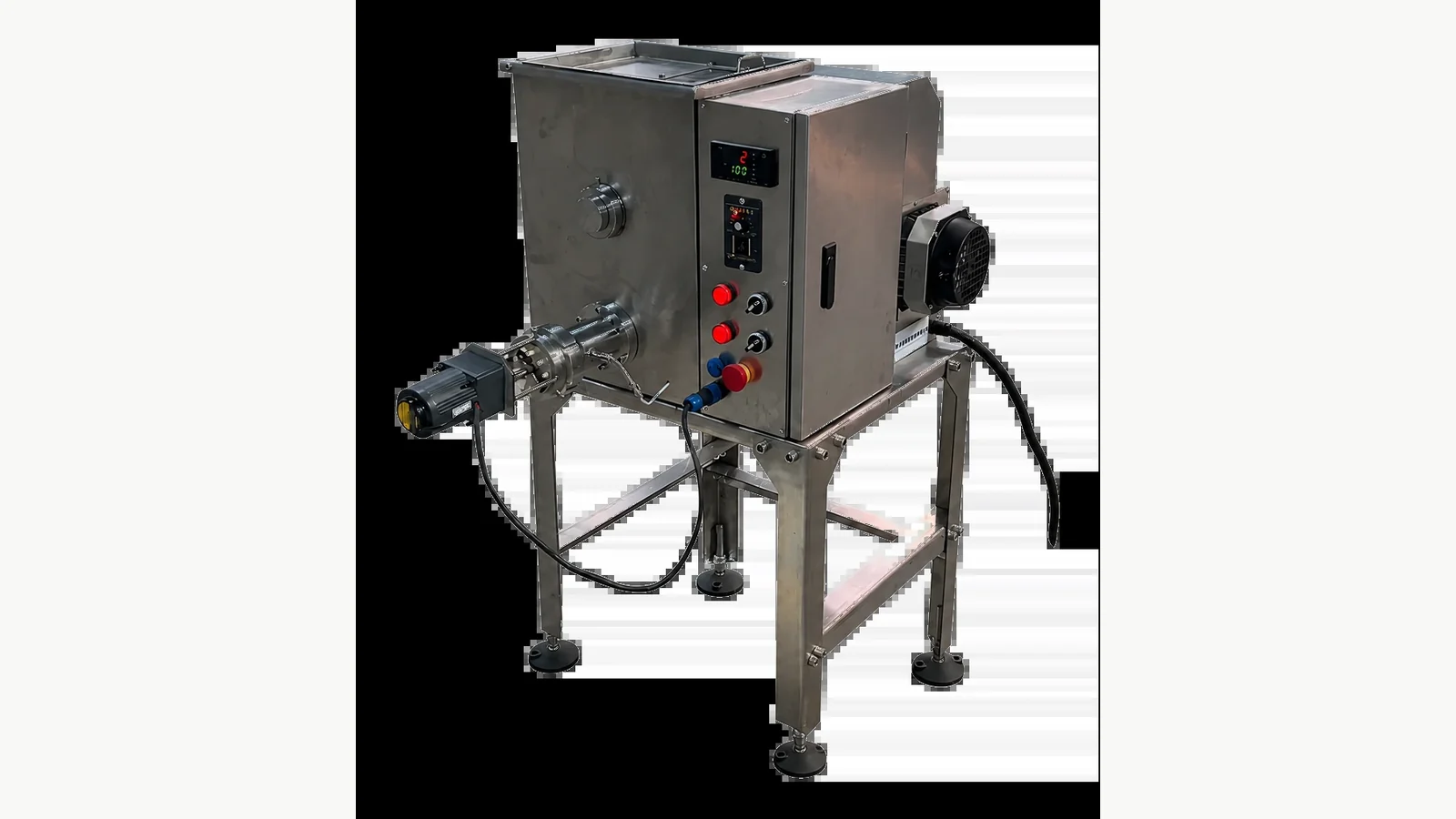
Zhuoheng confirms both output options. The smaller machine suits lower-volume or market-test work; the 40 kg/h range suits regular small-batch production with higher daily demand. Formula, shape, working time and fresh-versus-dry workflow still need technical confirmation before treating either figure as finished-product output.
Calculate the Daily Production Window
Start with kilograms expected on a normal day and on a peak day. Then estimate productive hours after preparation, cleaning, mold changes and adjustments.
Required hourly output = daily saleable demand ÷ productive machine hours.
For a restaurant needing 45 kg across a day, three productive hours would require about 15 kg/h before adding any allowance. If production must finish within two hours, the same demand points toward a higher output range or a different schedule. A food shop planning 160 kg per day across five productive hours requires about 32 kg/h, which places the 40 kg/h option in the relevant shortlist.
These examples are planning arithmetic, not output guarantees. Dough condition, formula, mold, cut length and workflow affect practical production. Use normal demand for the base case and check whether peak demand can be handled through an extra shift, earlier production or stored finished goods.
What Is Confirmed for Each Option?
| Decision item | 15 kg/h option | 40 kg/h option |
|---|---|---|
| Company status | Confirmed output option | Confirmed output option |
| Likely starting fit | Restaurants, limited batches, product testing | Food shops, growing brands, small production cells |
| Model, power and dimensions | To be confirmed for the offered configuration | ZHK website reference: 30–40 kg/h, 2.75 kW, 1300 × 650 × 1200 mm |
| Molds | Selected after target-product feasibility review | Selected after target-product feasibility review |
| Drying | Separate review for dry packaged pasta | Separate review for dry packaged pasta |
The 15 kg/h compact pasta machine page provides the correct product reference for the lower-output option. Its model, power, dimensions and weight should remain “to be confirmed” until they appear in the quotation.
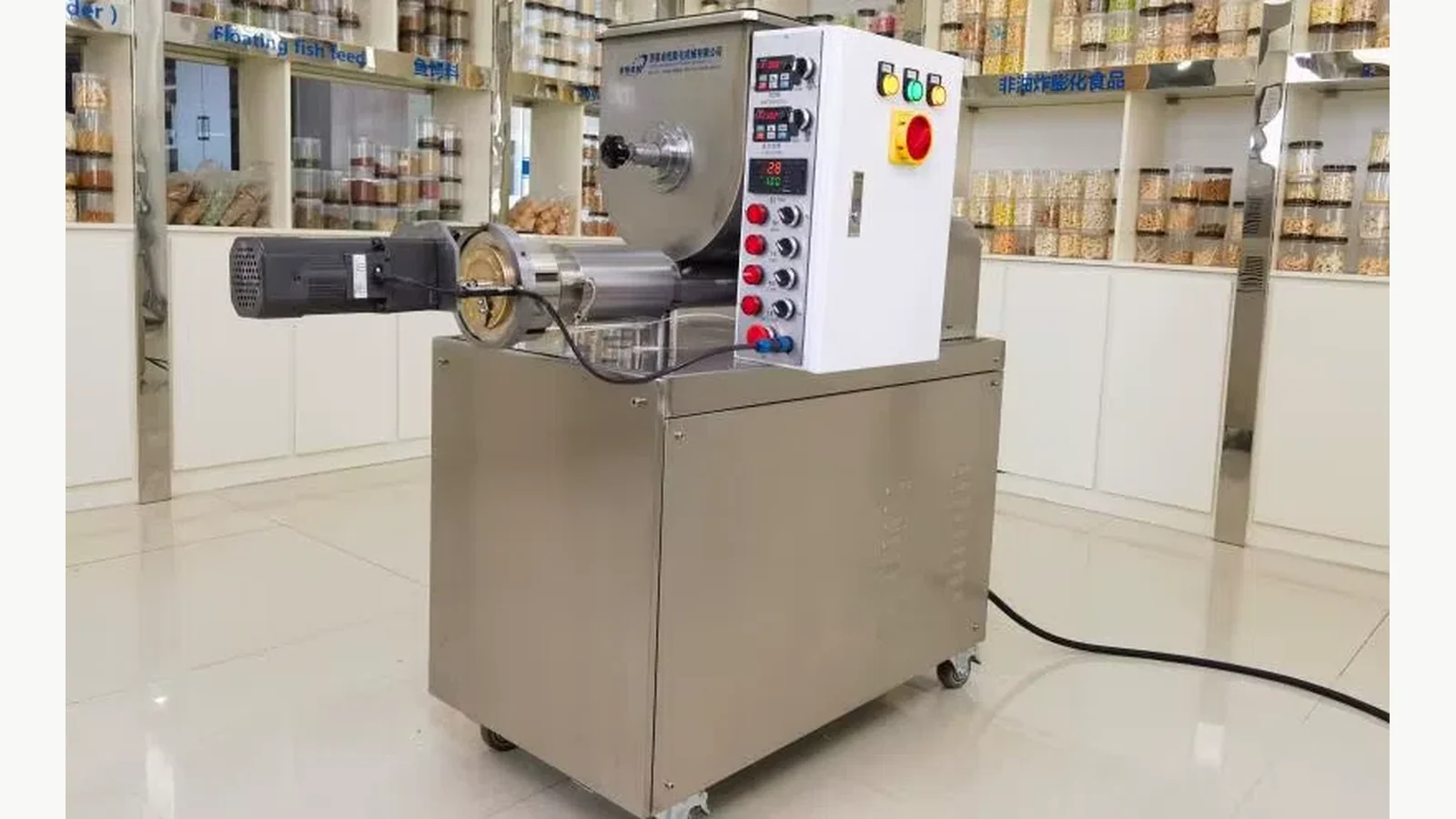
The 40 kg/h compact pasta machine page includes the ZHK 30–40 kg/h reference. Confirm whether the offered company 40 kg/h option uses that exact standard configuration rather than assuming every quotation has identical power and dimensions.
Choose by Workflow, Not Only Capacity
Restaurant or central kitchen
A restaurant may value short batches, quick cleaning and several menu shapes more than maximum hourly output. Review the time available before service, batch size, local voltage, cleaning access and where fresh pasta will rest or chill. The 15 kg/h option can be a logical starting point when daily demand fits the available window.
Food shop or growing brand
A shop producing regularly for retail needs a schedule for mixing, extrusion, cutting, handling and packing. At higher daily demand, 40 kg/h can reduce machine hours, but staff and downstream tasks must keep pace. If sales fluctuate, compare a shorter run on the larger machine against steadier utilization of the smaller option.
Product testing and market validation
Early-stage projects often benefit from smaller commercial batches because recipes, shapes and packaging are still changing. Record actual yield, setup time, cleaning time and rejects during trials. That operating data is more useful for expansion than a sales forecast alone.
Fresh and Dry Pasta Require Different Project Boundaries
A compact extruder forms and cuts product; it does not automatically define a complete dry-pasta factory. Fresh pasta needs hygienic handling, temperature control, short-term storage and a suitable packing plan. Dry packaged pasta needs a separate drying process sized for shape, formula, batch load and quality target.
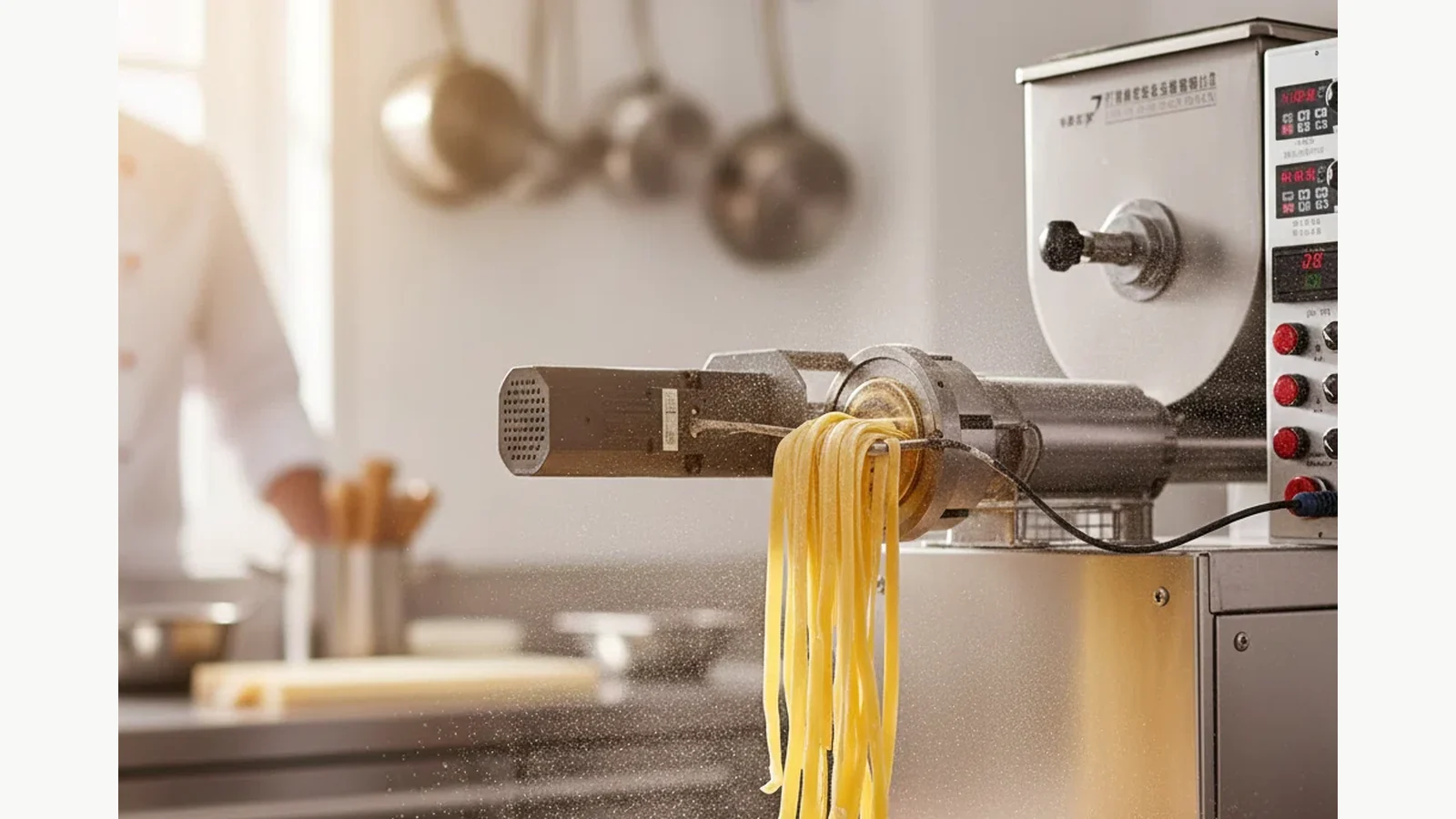
Illustrative extrusion scene; not a production acceptance test or proof of rated output.
Decide which product leaves the factory before requesting the machine. If the goal is dry retail pasta, ask for the dryer, trays or conveyors, cooling, holding and packaging scope separately. An extruder-only quotation is not comparable with a proposal that includes downstream processing.
The previous guide to compact pasta machine price factors explains why molds, downstream equipment, shipping and service boundaries can change the total project budget even when the machine capacity is unchanged.
Let Shapes and Changeovers Influence the Decision
Target pasta photos, dimensions and cut lengths should accompany the inquiry. Mold feasibility is confirmed against the requested product. Multiple shapes add changeover and cleaning time, which lowers productive hours.
Ask how the mold is installed, which cutting parts are included and what must be cleaned between products. If one high-volume shape represents most sales, calculate the base capacity from that item and check specialty shapes separately.
Check the Workspace and Utilities
Measure the production room, door openings, operator clearance, cleaning area and material flow. Confirm voltage, frequency and destination. Space is required not only for the machine but also for flour or semolina, mixing, trays, product handling, packing and finished goods.
For the 40 kg/h website reference, the stated 1300 × 650 × 1200 mm is a machine reference rather than a complete working-cell footprint. The actual offer should confirm equipment dimensions and the clearance required for operation and maintenance.
Decide When the Compact Range Is No Longer Enough
A compact machine is not a substitute for a 100–500 kg/h industrial macaroni production line. If daily demand, automated drying, continuous packing or distribution growth exceeds a compact workflow, prepare a new industrial-line brief instead of adding unsupported expectations to the small machine.
Before asking for a recommendation, send:
- normal and peak daily output;
- productive hours and preferred batch size;
- target pasta photos, dimensions and cut length;
- flour or semolina formula status;
- fresh or dry final-product route;
- mold and changeover plan;
- voltage, destination and workspace dimensions;
- packing method and growth target.
That information lets the supplier compare the two output levels against real work rather than simply choosing the larger number.